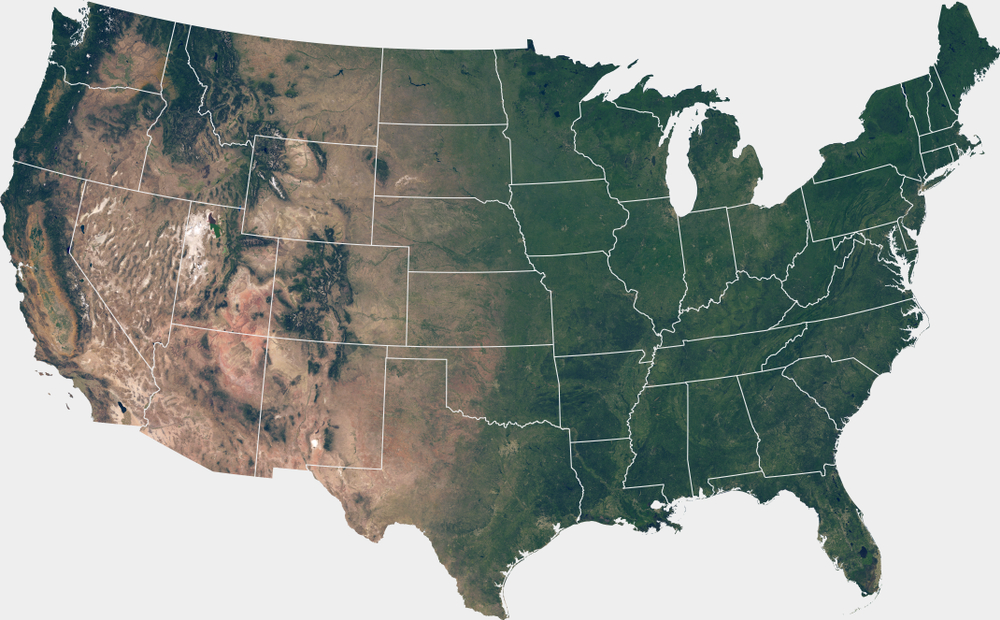
Outdoors
This page is dedicated to the parks and wild places I've explored. Every trail feels like a memory you can still walk back into.
Great Sand Dunes National Park • Alamosa, Colorado (follow the trail)


Type: National Park/Preserve
Weather: Sunny, windy
Trail(s): [Trail names]
Time Spent: Two hours
Difficulty: Moderate
The Experience
I visited the Great Sand Dunes in April of 2021 with my husband and my mom. The visit was actually part of a larger trip to Colorado for my mom's birthday, which is one of my fondest memories! We spent a lot of time at the gift shop as it was amazing! I have a poster hanging up in my bathroom from the park and a baseball cap from the park that I wear all the time (and admittedly stole from my mom, sorry mom!). The rangers there were very kind and informative.
The sand dunes themselves were gorgeous! I don't think I could have imagined how tall they were and the pictures don't do it justice at all. The sand was also so hard to walk on! The more we walked the more it seemed like we sunk into the shifting sands. My poor mom wasn't able to make it far unfortunately, and that combined with the fast, cold wind made it to where we didn't get to stay as long as we wanted. Despite this we still had fun! We wrote things in the sand with our feet (like boobs and a dick courtesy of my lovely husband lol) and got lots of sand everywhere when we rolled down the dunes.
If I was to go back, I'd definitely try our duneboarding! Apparently people take snowboards and glide down the dunes, which sounds amazing! The hardest part would for sure be getting up those giant, shifting dunes.
Highlights
- [Highlight one]
- [Highlight two]
- [Highlight three]
Challenges
[Difficulties, weather, navigation, unexpected moments]
Favorite Moment
Stumbling upon a heart made out of various dune rocks in the sands.
Notes for Next Time
Bring your boots with high lips so the sand doesn't get in them when you're walking. Make sure I and everyone I bring have the stamina to climb the dunes. Bring enough money to spend in the gift shop.
Pedernales Falls State Park • Johnson City, Texas (follow the trail)
Pedernales Falls State Park
Johnson City, Texas • Visited: Visited multiple times over different seasons
Type: State Park
Weather: Usually sunny
Trail(s): [Trail names]
Time Spent: Hours and hours
Difficulty: Easy
The Experience
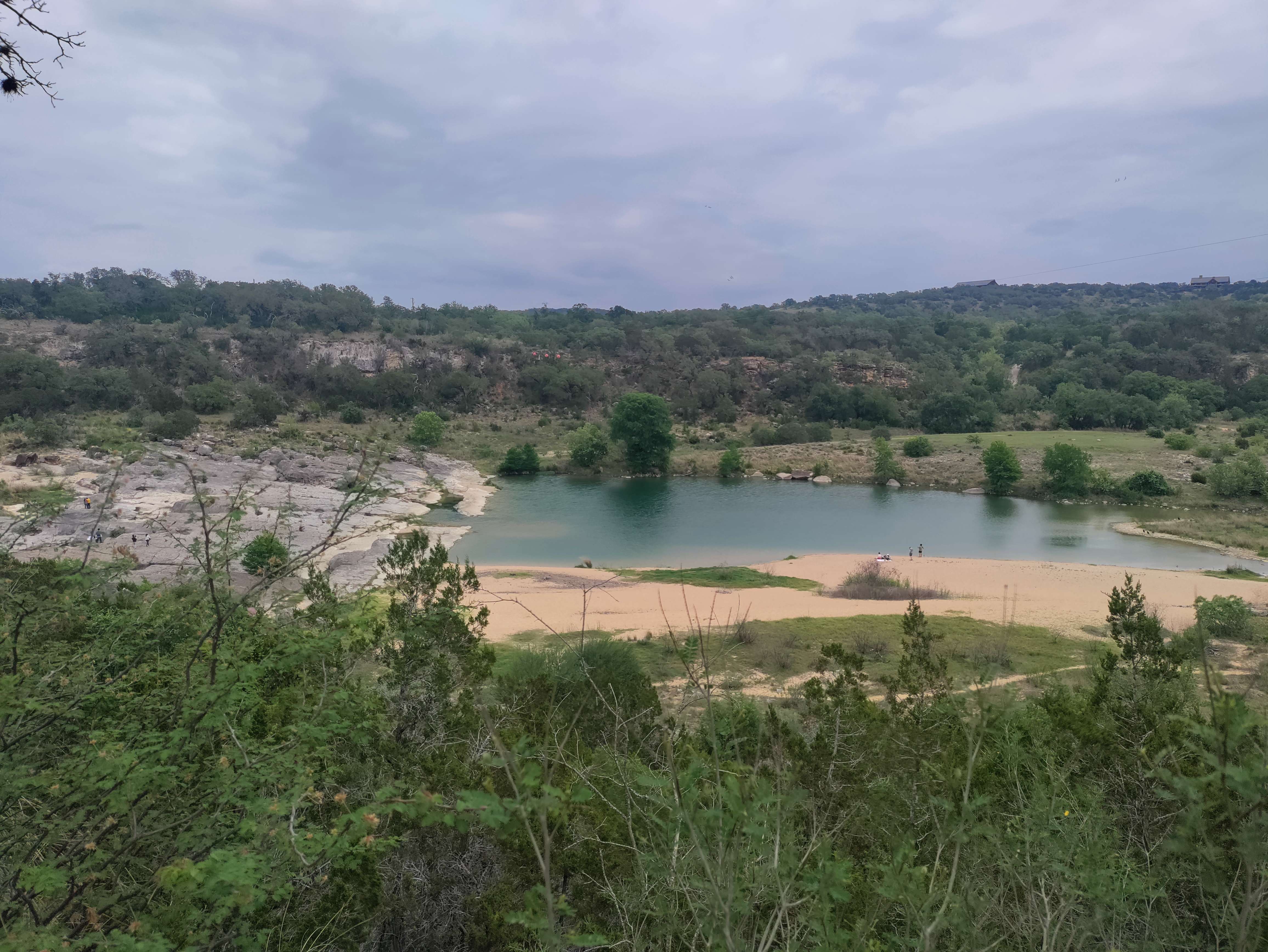
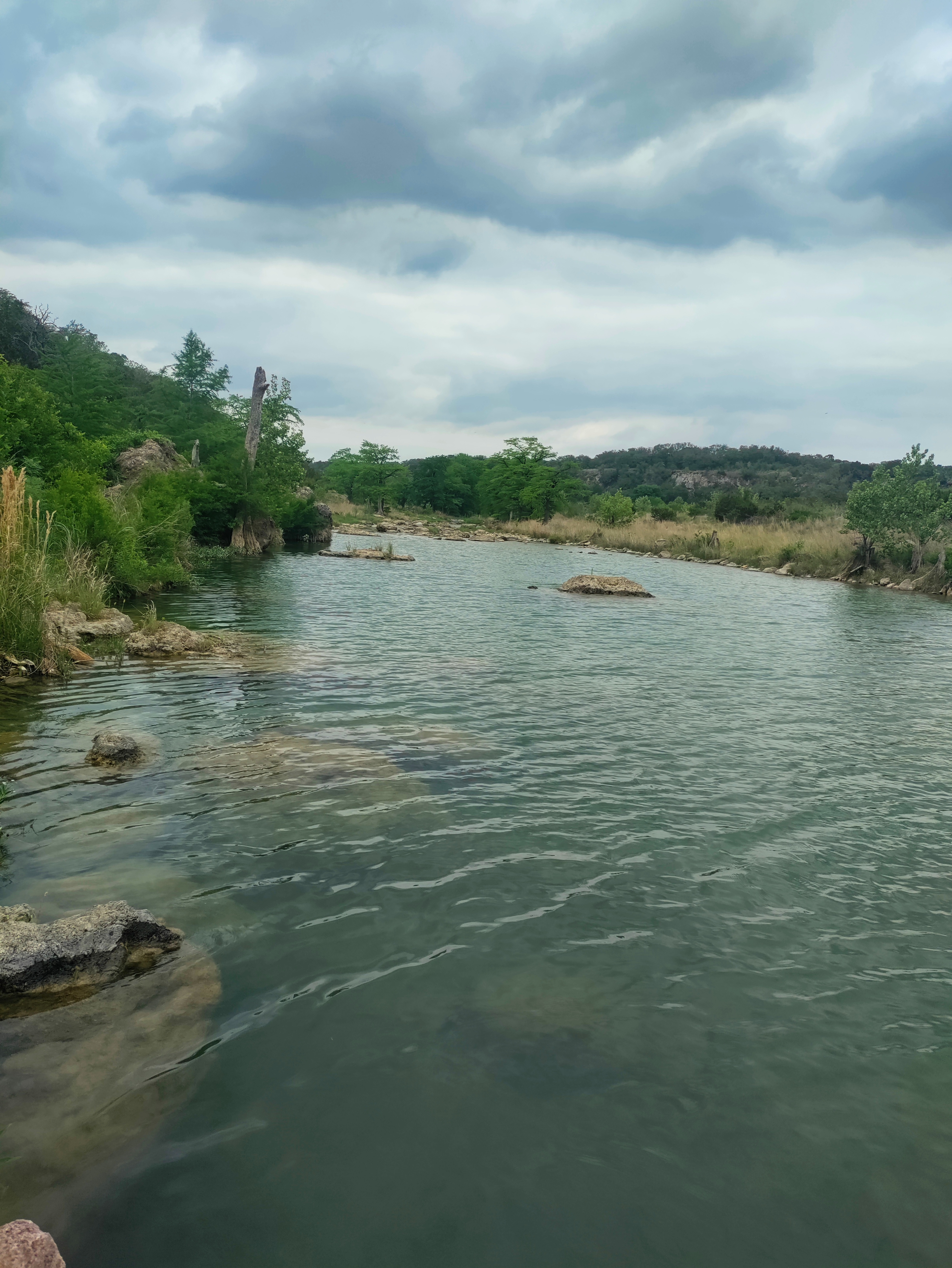
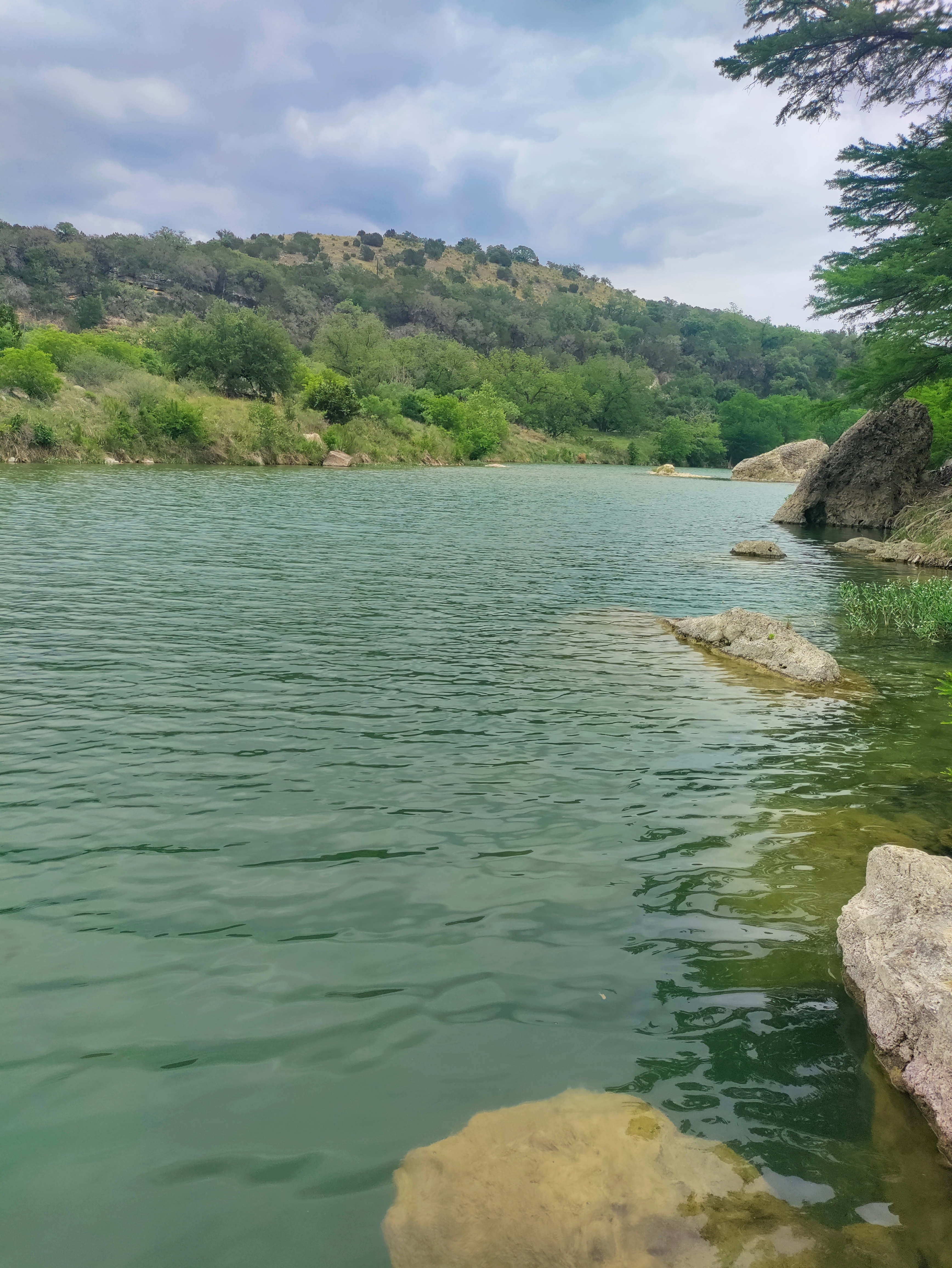
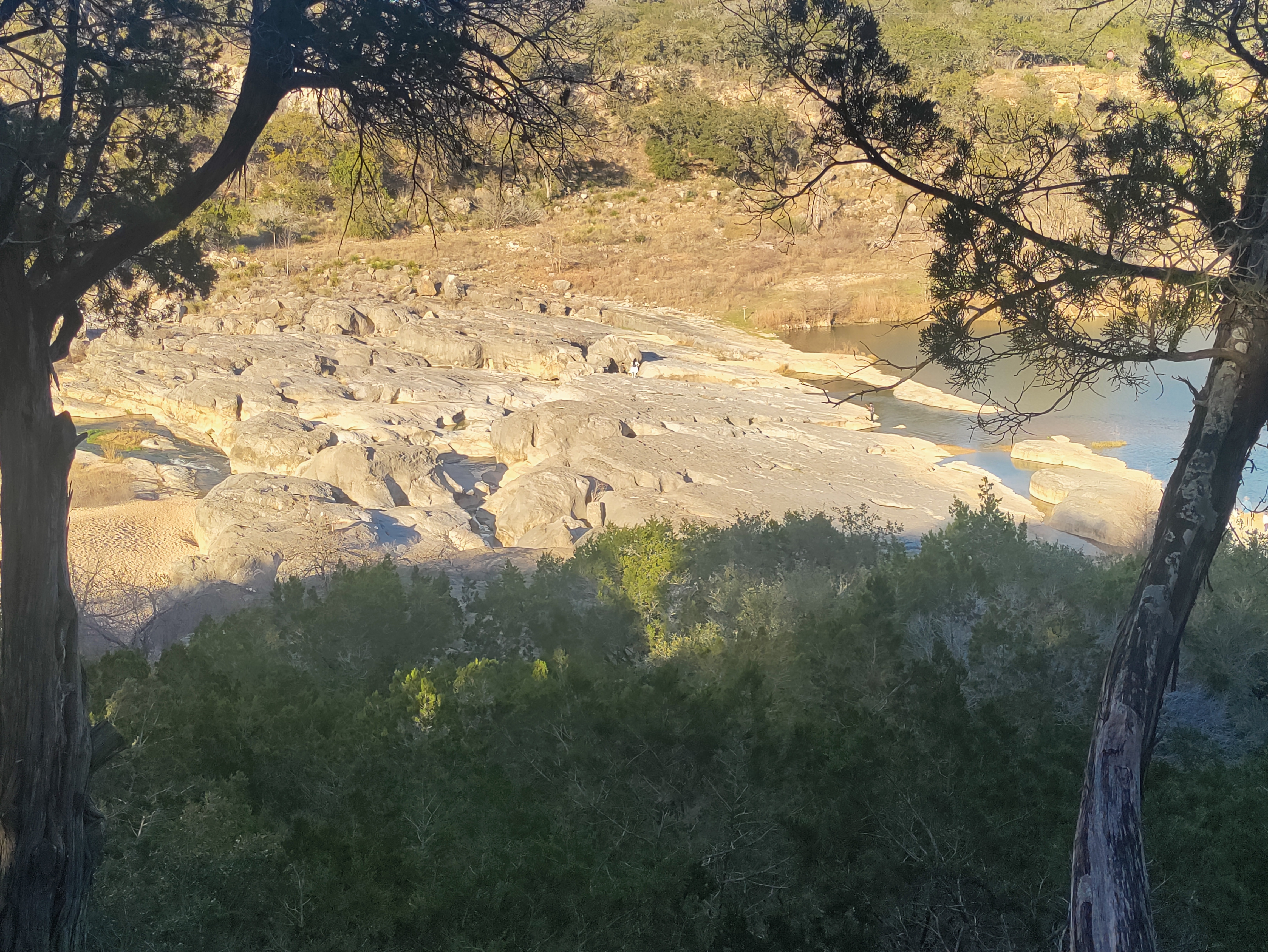
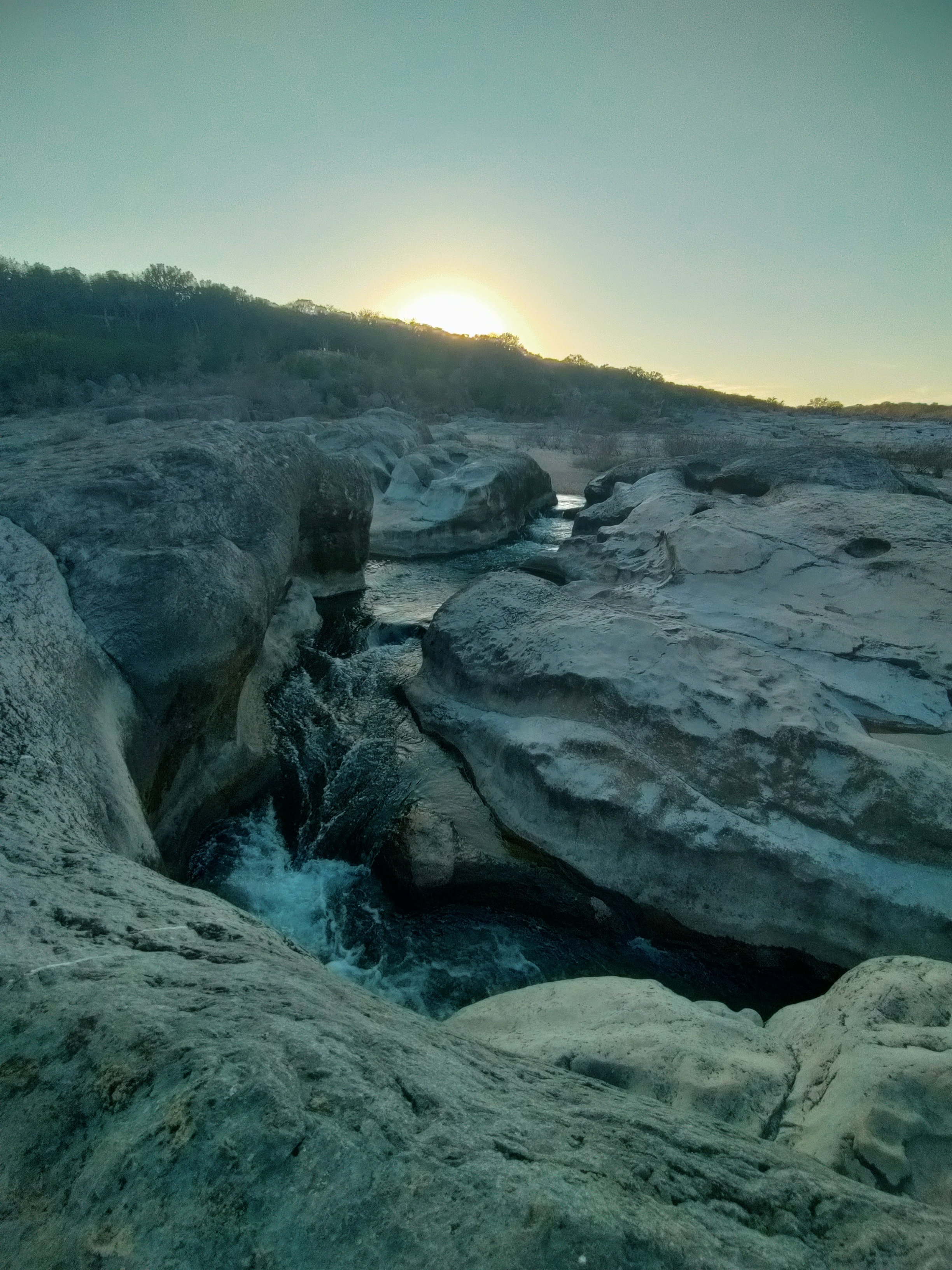
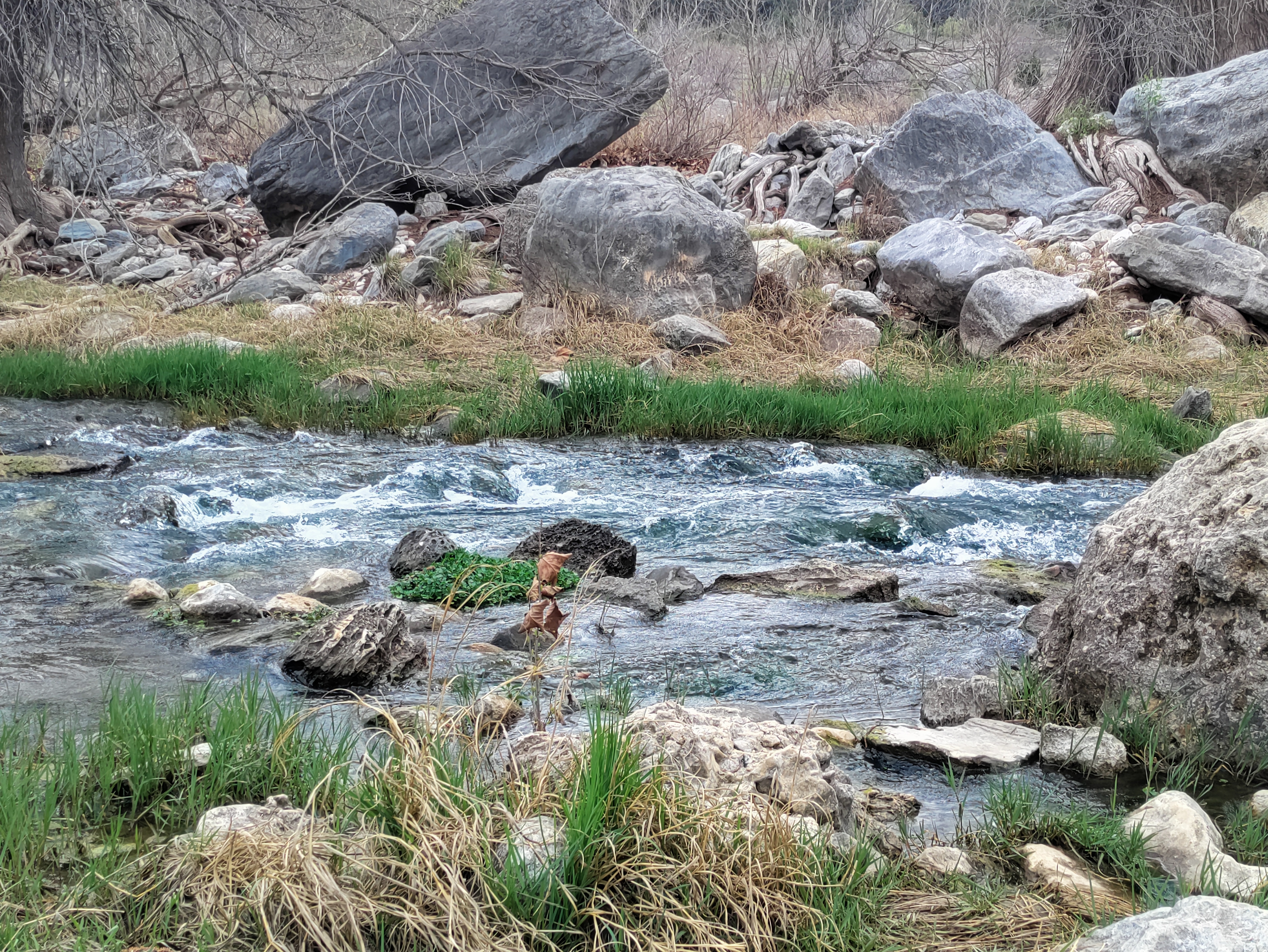
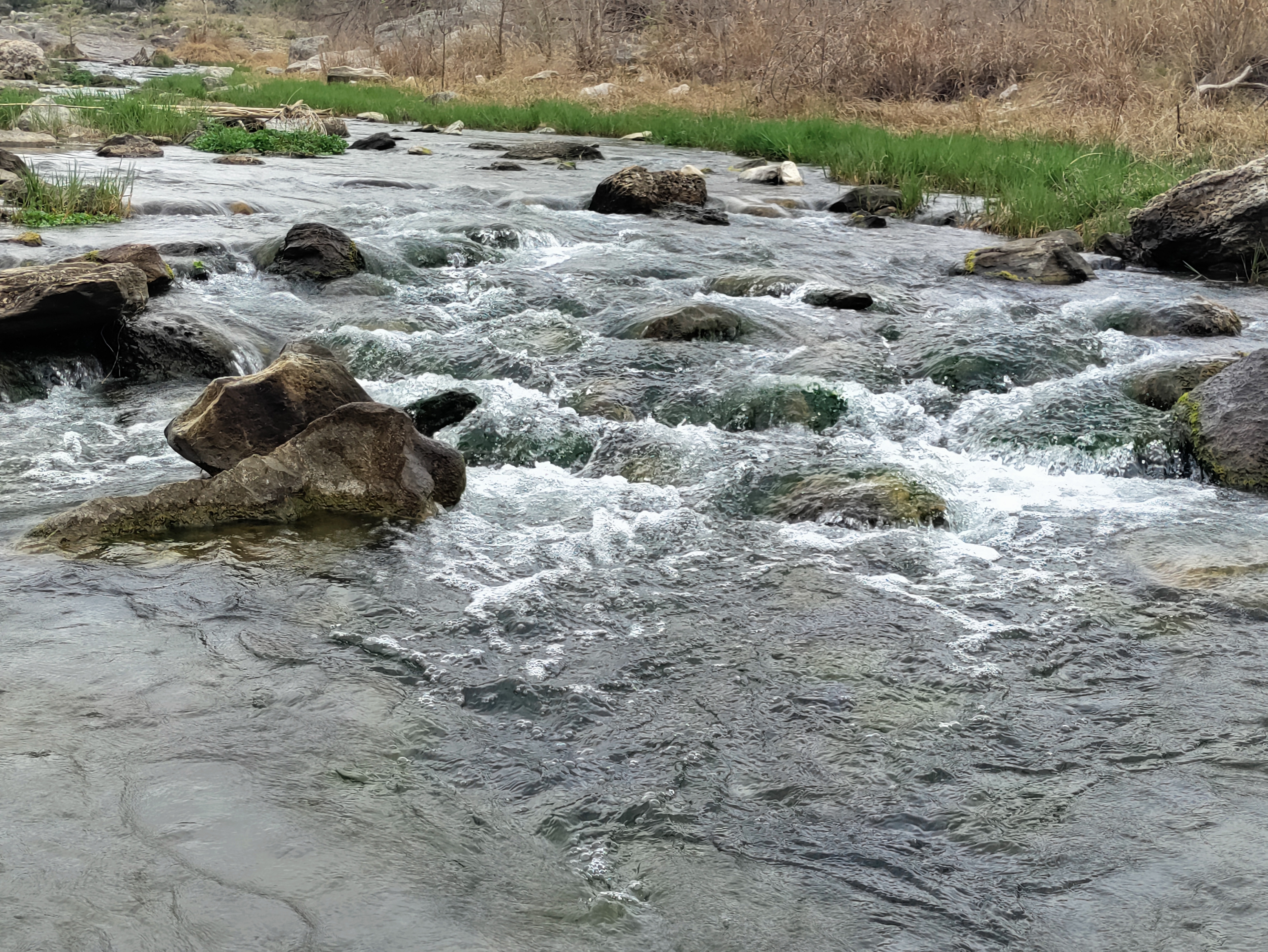
Pedernales State Park was not that far from where I used to live and as a result I went there fairly often. It's a beautiful park nestles in the hills of the Texas Hill Country to the west of Austin. It is notable for its titular falls, a section of the Blanco River where it flows of 300 million year old limestone rocks. With these millions of years of erosion, the rocks have deep channels carving throughout them. As long as there is no flash flood or potential for one, you can freely walk and hop across the limestone, seeing the river coursing through the mini canyons.
Beyond the limestone section, the park has much to offer. There are numerous trails throughout the park that are great to hike, including some near the river. Further down from the limestone section of the river are places to swim and fish, though the river doesn't get too deep. Despite this, the waters are a nice and cool respite from the Texas heat. Me and my husband enjoyed trying to fish on the banks (especially because you don't need a license to fish in Texas State Parks!) though we never had much luck at all.
While the chance of me returning is very low now that I live all the way across the country, I'll always have fond memories of hiking, swimming, and fishing in this beautiful park :)
Highlights
- [Highlight one]
- [Highlight two]
- [Highlight three]
Challenges
[Difficulties, weather, navigation, unexpected moments]
Favorite Moment
[A specific memory that stood out]
Notes for Next Time
[Things you'd do differently, things to bring, trails to try]
Blanco State Park • Blanco, Texas (follow the trail)
Blanco State Park
Blanco, Texas • Visited: Multiple times over multiple seasons
Type: [National Park / State Park / etc.]
Weather: [Sunny / Foggy / Rainy / etc.]
Trail(s): [Trail names]
Time Spent: [Hours / Days]
Difficulty: [Easy / Moderate / Hard]
The Experience
[Write about the trip here. What I saw, how it felt, anything memorable.]
Highlights
- [Highlight one]
- [Highlight two]
- [Highlight three]
Challenges
[Difficulties, weather, navigation, unexpected moments]
Favorite Moment
[A specific memory that stood out]
Notes for Next Time
[Things you'd do differently, things to bring, trails to try]
Ouachita National Forest • Hot Springs, Arkansas (follow the trail)
Ouachita National Forest
Hot Springs, Arkansas • Visited: [Date or Season]
Type: [National Park / State Park / etc.]
Weather: [Sunny / Foggy / Rainy / etc.]
Trail(s): [Trail names]
Time Spent: [Hours / Days]
Difficulty: [Easy / Moderate / Hard]
The Experience
[Write about the trip here. What I saw, how it felt, anything memorable.]
Highlights
- [Highlight one]
- [Highlight two]
- [Highlight three]
Challenges
[Difficulties, weather, navigation, unexpected moments]
Favorite Moment
[A specific memory that stood out]
Notes for Next Time
[Things you'd do differently, things to bring, trails to try]
[Optional atmospheric note… something small and reflective]
25 Mile Creek State Park • Chelan, Washington (follow the trail)
25 Mile Creek State Park
Chelan, Washington • Visited: [Date or Season]
Type: [National Park / State Park / etc.]
Weather: [Sunny / Foggy / Rainy / etc.]
Trail(s): [Trail names]
Time Spent: [Hours / Days]
Difficulty: [Easy / Moderate / Hard]
The Experience
[Write about your trip here. What you saw, how it felt, anything memorable.]
Highlights
- [Highlight one]
- [Highlight two]
- [Highlight three]
Challenges
[Difficulties, weather, navigation, unexpected moments]
Favorite Moment
[A specific memory that stood out]
Notes for Next Time
[Things I'd do differently, things to bring, trails to try]
[Optional atmospheric note… something small and reflective]
Davy Crockett National Forestk Name] • Kennard, Texas (follow the trail)
Davy Crockett National Forest
Kennard, Texas • Visited: [Date or Season]
Type: [National Park / State Park / etc.]
Weather: [Sunny / Foggy / Rainy / etc.]
Trail(s): [Trail names]
Time Spent: [Hours / Days]
Difficulty: [Easy / Moderate / Hard]
The Experience
[Write about your trip here. What you saw, how it felt, anything memorable.]
Highlights
- [Highlight one]
- [Highlight two]
- [Highlight three]
Challenges
[Difficulties, weather, navigation, unexpected moments]
Favorite Moment
[A specific memory that stood out]
Notes for Next Time
[Things you'd do differently, things to bring, trails to try]
[Optional atmospheric note… something small and reflective]
Fort Boggy State Park • Centerville, Texas (follow the trail)
Fort Boggy State Park
Centerville, Texas • Visited: [Date or Season]
Type: [National Park / State Park / etc.]
Weather: [Sunny / Foggy / Rainy / etc.]
Trail(s): [Trail names]
Time Spent: [Hours / Days]
Difficulty: [Easy / Moderate / Hard]
The Experience
[Write about your trip here. What you saw, how it felt, anything memorable.]
Highlights
- [Highlight one]
- [Highlight two]
- [Highlight three]
Challenges
[Difficulties, weather, navigation, unexpected moments]
Favorite Moment
[A specific memory that stood out]
Notes for Next Time
[Things you'd do differently, things to bring, trails to try]
[Optional atmospheric note… something small and reflective]
Choke Canyon State Park • Calliham, Texas (follow the trail)
Choke Canyon State Park
Calliham, Texas • Visited: [Date or Season]
Type: [National Park / State Park / etc.]
Weather: [Sunny / Foggy / Rainy / etc.]
Trail(s): [Trail names]
Time Spent: [Hours / Days]
Difficulty: [Easy / Moderate / Hard]
The Experience
[Write about your trip here. What you saw, how it felt, anything memorable.]
Highlights
- [Highlight one]
- [Highlight two]
- [Highlight three]
Challenges
[Difficulties, weather, navigation, unexpected moments]
Favorite Moment
[A specific memory that stood out]
Notes for Next Time
[Things you'd do differently, things to bring, trails to try]
[Optional atmospheric note… something small and reflective]
Lost Maples State Natural Area • Vanderpool, Texas (follow the trail)
Lost Maples State Natural Area
Vanderpool, Texas • Visited: [Date or Season]
Type: [National Park / State Park / etc.]
Weather: [Sunny / Foggy / Rainy / etc.]
Trail(s): [Trail names]
Time Spent: [Hours / Days]
Difficulty: [Easy / Moderate / Hard]
The Experience
[Write about your trip here. What you saw, how it felt, anything memorable.]
Highlights
- [Highlight one]
- [Highlight two]
- [Highlight three]
Challenges
[Difficulties, weather, navigation, unexpected moments]
Favorite Moment
[A specific memory that stood out]
Notes for Next Time
[Things you'd do differently, things to bring, trails to try]
[Optional atmospheric note… something small and reflective]
Olympic National Park • Port Angeles, Washington (follow the trail)
Olympic National Park
Port Angeles, Washington • Visited: [Date or Season]
Type: [National Park / State Park / etc.]
Weather: [Sunny / Foggy / Rainy / etc.]
Trail(s): [Trail names]
Time Spent: [Hours / Days]
Difficulty: [Easy / Moderate / Hard]
The Experience
[Write about your trip here. What you saw, how it felt, anything memorable.]
Highlights
- [Highlight one]
- [Highlight two]
- [Highlight three]
Challenges
[Difficulties, weather, navigation, unexpected moments]
Favorite Moment
[A specific memory that stood out]
Notes for Next Time
[Things you'd do differently, things to bring, trails to try]
[Optional atmospheric note… something small and reflective]
Goose Island State Park • Rockport, Texas (follow the trail)
Goose Island State Park
Rockport, Texas • Visited: [Date or Season]
Type: [National Park / State Park / etc.]
Weather: [Sunny / Foggy / Rainy / etc.]
Trail(s): [Trail names]
Time Spent: [Hours / Days]
Difficulty: [Easy / Moderate / Hard]
The Experience
[Write about your trip here. What you saw, how it felt, anything memorable.]
Highlights
- [Highlight one]
- [Highlight two]
- [Highlight three]
Challenges
[Difficulties, weather, navigation, unexpected moments]
Favorite Moment
[A specific memory that stood out]
Notes for Next Time
[Things you'd do differently, things to bring, trails to try]
[Optional atmospheric note… something small and reflective]
Garner State Park • Concan, Texas (follow the trail)
Garner State Park
Concan, Texas • Visited: [Date or Season]
Type: [National Park / State Park / etc.]
Weather: [Sunny / Foggy / Rainy / etc.]
Trail(s): [Trail names]
Time Spent: [Hours / Days]
Difficulty: [Easy / Moderate / Hard]
The Experience
[Write about your trip here. What you saw, how it felt, anything memorable.]
Highlights
- [Highlight one]
- [Highlight two]
- [Highlight three]
Challenges
[Difficulties, weather, navigation, unexpected moments]
Favorite Moment
[A specific memory that stood out]
Notes for Next Time
[Things you'd do differently, things to bring, trails to try]
[Optional atmospheric note… something small and reflective]
Ray Roberts Lake State Park • Pilot Point, Texas (follow the trail)
Ray Roberts Lake State Park
Pilot Point, Texas • Visited: [Date or Season]
Type: [National Park / State Park / etc.]
Weather: [Sunny / Foggy / Rainy / etc.]
Trail(s): [Trail names]
Time Spent: [Hours / Days]
Difficulty: [Easy / Moderate / Hard]
The Experience
[Write about your trip here. What you saw, how it felt, anything memorable.]
Highlights
- [Highlight one]
- [Highlight two]
- [Highlight three]
Challenges
[Difficulties, weather, navigation, unexpected moments]
Favorite Moment
[A specific memory that stood out]
Notes for Next Time
[Things you'd do differently, things to bring, trails to try]
[Optional atmospheric note… something small and reflective]
Lake Chelan State Park • Chelan, Washington (follow the trail)
Lake Chelan State Park
Chelan, Washington • Visited: [Date or Season]
Type: [National Park / State Park / etc.]
Weather: [Sunny / Foggy / Rainy / etc.]
Trail(s): [Trail names]
Time Spent: [Hours / Days]
Difficulty: [Easy / Moderate / Hard]
The Experience
[Write about your trip here. What you saw, how it felt, anything memorable.]
Highlights
- [Highlight one]
- [Highlight two]
- [Highlight three]
Challenges
[Difficulties, weather, navigation, unexpected moments]
Favorite Moment
[A specific memory that stood out]
Notes for Next Time
[Things you'd do differently, things to bring, trails to try]
[Optional atmospheric note… something small and reflective]